Let's Talk About Eggs
- By Lisa Soesbe
- •
- 09 Mar, 2018
- •
Clearing up the confusion about egg labels and what they mean
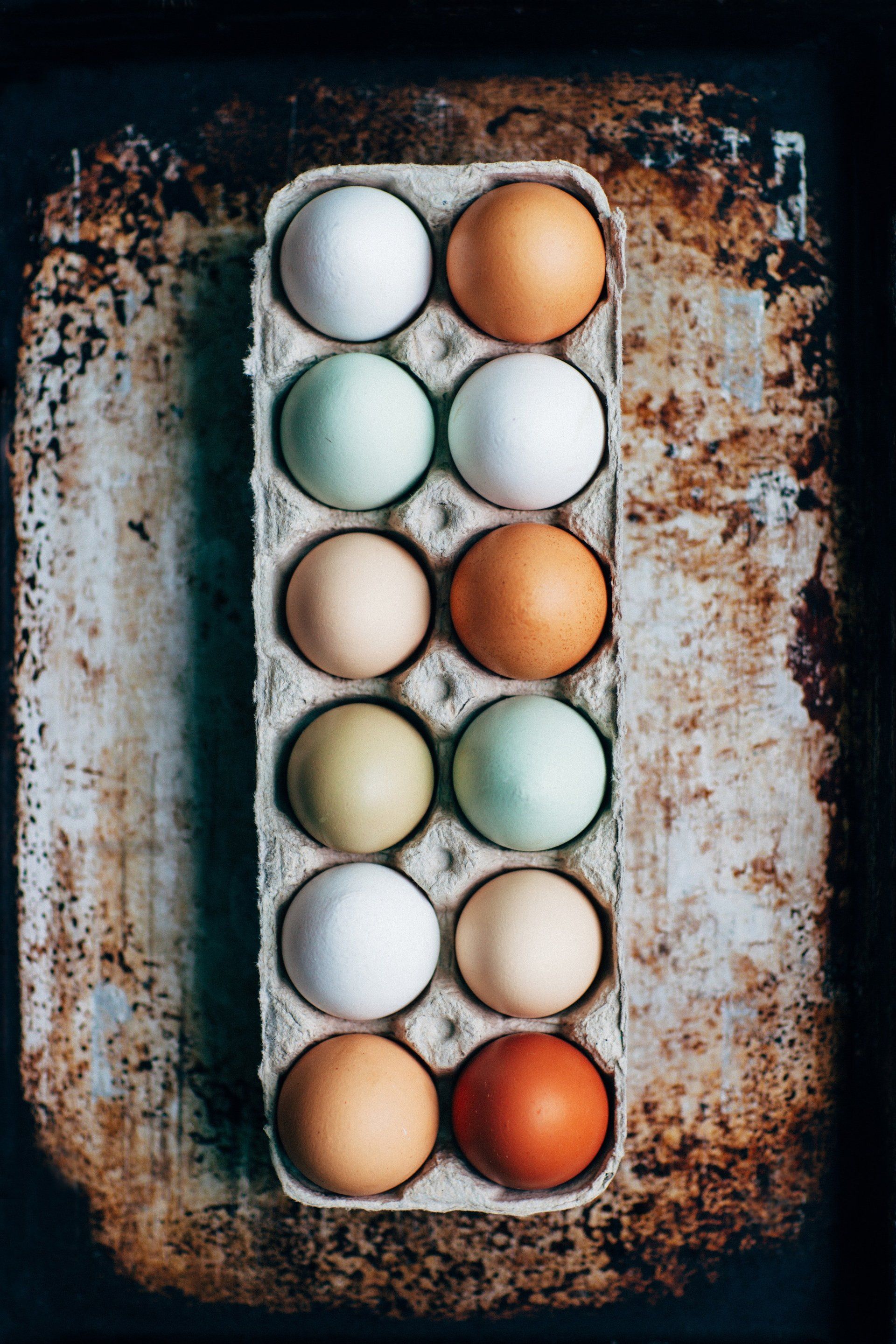
Are you confused by all of the varieties of eggs available in the grocery store? It can be confusing. Not very long ago the only eggs you could find in the grocery store were the conventional eggs in a styrofoam container. Today, there are so many different buzz words on the labels that it can seem overwhelming. To clear up the confusion, I will break it down for you.
Conventional Eggs
The hens that lay these eggs live in cages with an area that is smaller than a piece of notebook paper equal to exactly 67 square inches of space each. Not only do these birds have no room to spread their wings, they do not go outside at all, they eat a diet of genetically modified corn or soy and are given vitamins and minerals to supplement their diet. These birds are also given antibiotics. Most of the eggs that are consumed in the United States are from these factory farmed birds.
Omega-3 Enriched Eggs
Next on the list are Omega-3 Enriched eggs. Don't let this label fool you. The eggs that come from these birds are pretty much the same as conventional but they have Omega-3 from flax seed, fish oil, or alfalfa seed added to their feed. Sometimes they will say "free range" which just means that they have some access to the outside. However, they are still being fed GMOs just like the conventional eggs.
Cage-Free
This means that these birds have more room than conventional birds but they are not really "free" because they are usually confined by crowded sheds or muddy pens instead of "cages". They most likely never see the outdoors and still eat a diet of GMO corn or soy.
Free Range
This means the birds are allowed access to the outside based on the USDA's definition of the term. These birds have less than 2 square feet each and even though they have more room than their cage free friends, many still don't see the outdoors. The term is not regulated so a farmer can open a door for the birds and claim that they are free range but there is no guarantee that they can get through said door. It also doesn't guarantee that these birds can have any access to grass, some may only be able to access concrete. If they are not actually able to touch grass, do you think they are hunting and pecking for worms and other organisms that chickens eat? If you guessed no, you would be correct, in this case these "free-range" birds may still be eating feed that is made of GMO corn or soy. The only way to know for sure is to talk to the farmer about their practices.
Vegetarian Fed
This may imply that the eggs are healthier, but considering chickens are not vegetarians, this should be a red flag to consumers. If a carton says vegetarian fed, that would mean that the chickens are not eating the things that chickens eat in nature like bugs, worms and grubs. Chickens are omnivores. When I see this term, I can make the assumption that they are instead being fed GMO soy, corn and grains and are not pastured.
Organic
Organic eggs come from birds that are raised the same as conventional birds but the only differences are that they are not treated with antibiotics or hormones. (By the way if a label says it is raised without hormones, it basically means nothing because federal law prohibits the use of hormones in poultry so they are just telling you that they are complying with the law).
Pastured
Pastured eggs come from birds that are able to graze freely on pasture, eating tons of worms, grass, dirt, bugs and other things that they may find in the dirt and grass. They may be given a small amount of feed, as needed.
According to a study done by Mother Earth News in 2007, conventional store bought eggs are nutritionally inferior to pastured eggs. Compared to official U.S. Department of Agriculture (USDA) nutrient data for commercial eggs, eggs from hens raised on pasture may contain:
This is a picture of a well know brand of Organic Free Range eggs (shown on the right) found in the supermarket compared to the pasture raised eggs that I purchased from a local farmer (shown on the left). Do you notice the difference in the color?
Conventional Eggs
The hens that lay these eggs live in cages with an area that is smaller than a piece of notebook paper equal to exactly 67 square inches of space each. Not only do these birds have no room to spread their wings, they do not go outside at all, they eat a diet of genetically modified corn or soy and are given vitamins and minerals to supplement their diet. These birds are also given antibiotics. Most of the eggs that are consumed in the United States are from these factory farmed birds.
Omega-3 Enriched Eggs
Next on the list are Omega-3 Enriched eggs. Don't let this label fool you. The eggs that come from these birds are pretty much the same as conventional but they have Omega-3 from flax seed, fish oil, or alfalfa seed added to their feed. Sometimes they will say "free range" which just means that they have some access to the outside. However, they are still being fed GMOs just like the conventional eggs.
Cage-Free
This means that these birds have more room than conventional birds but they are not really "free" because they are usually confined by crowded sheds or muddy pens instead of "cages". They most likely never see the outdoors and still eat a diet of GMO corn or soy.
Free Range
This means the birds are allowed access to the outside based on the USDA's definition of the term. These birds have less than 2 square feet each and even though they have more room than their cage free friends, many still don't see the outdoors. The term is not regulated so a farmer can open a door for the birds and claim that they are free range but there is no guarantee that they can get through said door. It also doesn't guarantee that these birds can have any access to grass, some may only be able to access concrete. If they are not actually able to touch grass, do you think they are hunting and pecking for worms and other organisms that chickens eat? If you guessed no, you would be correct, in this case these "free-range" birds may still be eating feed that is made of GMO corn or soy. The only way to know for sure is to talk to the farmer about their practices.
Vegetarian Fed
This may imply that the eggs are healthier, but considering chickens are not vegetarians, this should be a red flag to consumers. If a carton says vegetarian fed, that would mean that the chickens are not eating the things that chickens eat in nature like bugs, worms and grubs. Chickens are omnivores. When I see this term, I can make the assumption that they are instead being fed GMO soy, corn and grains and are not pastured.
Organic
Organic eggs come from birds that are raised the same as conventional birds but the only differences are that they are not treated with antibiotics or hormones. (By the way if a label says it is raised without hormones, it basically means nothing because federal law prohibits the use of hormones in poultry so they are just telling you that they are complying with the law).
Pastured
Pastured eggs come from birds that are able to graze freely on pasture, eating tons of worms, grass, dirt, bugs and other things that they may find in the dirt and grass. They may be given a small amount of feed, as needed.
According to a study done by Mother Earth News in 2007, conventional store bought eggs are nutritionally inferior to pastured eggs. Compared to official U.S. Department of Agriculture (USDA) nutrient data for commercial eggs, eggs from hens raised on pasture may contain:
1⁄3 less cholesterol
1⁄4 less saturated fat
2⁄3 more vitamin A
2 times more omega-3 fatty acids
3 times more vitamin E
7 times more beta carotene
4-6 times more vitamin D
This is a picture of a well know brand of Organic Free Range eggs (shown on the right) found in the supermarket compared to the pasture raised eggs that I purchased from a local farmer (shown on the left). Do you notice the difference in the color?
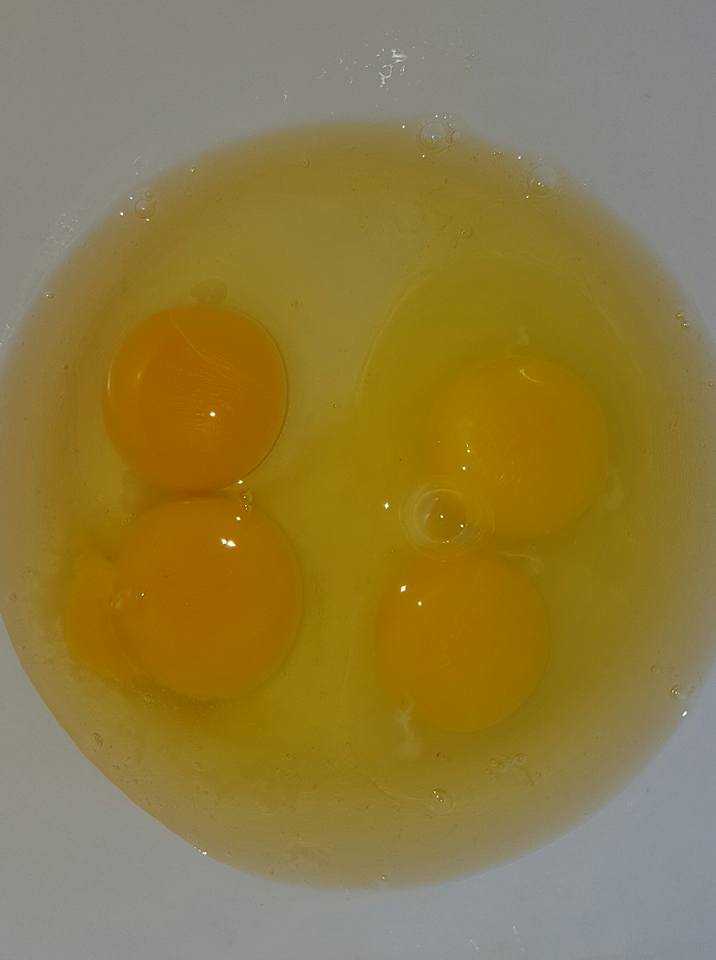
The organic free range eggs pictured here are healthy but there is a clear difference in the color and that is why I do my best to purchase pastured eggs whenever possible.
Wondering where you can find pastured eggs? I am happy to say that here in Florida, our local Publix supermarket carries more than one brand of pastured eggs, however, if you can find fresh pastured eggs from a local farmer's market or local farmer, I recommend getting them instead. They will be fresh and you will be supporting your local farmer. The price is generally a dollar or two more for pastured eggs in the grocery store but they do go on sale often and you can stock up.
For help finding local eggs in your area, check these websites:
www.eatwild.com
www.localharvest.com
www.eatlocalgrown.com
If you have a hard time finding pastured eggs, consider spending a little extra for organic eggs as you will find that they taste better and are more nutritious for your family. The Cornucopia institute has a great rating system for organic eggs that can help you find the best quality eggs for your family. Check out a direct link to the scorecard here:
https://www.cornucopia.org/scorecard/eggs/
Wondering where you can find pastured eggs? I am happy to say that here in Florida, our local Publix supermarket carries more than one brand of pastured eggs, however, if you can find fresh pastured eggs from a local farmer's market or local farmer, I recommend getting them instead. They will be fresh and you will be supporting your local farmer. The price is generally a dollar or two more for pastured eggs in the grocery store but they do go on sale often and you can stock up.
For help finding local eggs in your area, check these websites:
www.eatwild.com
www.localharvest.com
www.eatlocalgrown.com
If you have a hard time finding pastured eggs, consider spending a little extra for organic eggs as you will find that they taste better and are more nutritious for your family. The Cornucopia institute has a great rating system for organic eggs that can help you find the best quality eggs for your family. Check out a direct link to the scorecard here:
https://www.cornucopia.org/scorecard/eggs/
Here is a little visual to help you better understand labels on eggs from the Cornucopia Institute.
Now that you are informed, tell me, how would you like your eggs?

Have you ever bribed your children with sweet treats to get them to do something? Let’s face it, we have all done this before. I’ll be the first one to say I have done this until I realized why I should stop the cycle.
In schools, sporting clubs, and other activities where children are involved, people reward children with candy and other unhealthy snacks. There are even popular lesson plans used in schools that include using M&M’s or Skittles; after the children use the treats for their lesson, they get to eat them as their reward. In American society, this has now become the norm. Go to the barbershop and Johnny gets a treat because he sat so nicely for his haircut. Go to dance class and little Mary gets a piece of candy at the end of class. Go to the bank and Joey gets a lollipop for being a good boy in the bank. It goes on and on. The people that assume that this is okay think, “What’s the big deal?”. This may even be you! I will tell you why this is such a big deal. This is affecting our children both physically and emotionally.
In schools, sporting clubs, and other activities where children are involved, people reward children with candy and other unhealthy snacks. There are even popular lesson plans used in schools that include using M&M’s or Skittles; after the children use the treats for their lesson, they get to eat them as their reward. In American society, this has now become the norm. Go to the barbershop and Johnny gets a treat because he sat so nicely for his haircut. Go to dance class and little Mary gets a piece of candy at the end of class. Go to the bank and Joey gets a lollipop for being a good boy in the bank. It goes on and on. The people that assume that this is okay think, “What’s the big deal?”. This may even be you! I will tell you why this is such a big deal. This is affecting our children both physically and emotionally.



If there is one thing I am good at, it is stretching a dollar. This is one reason I love getting gift cards for gifts. I know that I am great at getting as much out of that gift card that I can by shopping myself. It is like a game for me to see how much stuff I can get with a gift card paired with sales and coupons. Call me weird but it saves me money! I do the same thing when it comes to purchasing groceries. I have standards when it comes to the food I am eating and feeding my family. Food is one of the most important things that you buy and what kind of food you are buying matters in terms of your health. So while I would much rather to be able to purchase good food than sport a luxury purse or designer clothing, I still like to stretch my food dollars as much as possible. If I told you that you can actually get cash back for eating healthy, would you believe me?
I want to share a little hack I discovered a long time ago that I use a lot and pretty much for any online shopping. Have you ever heard of Ebates ? If you are not a member, you are going to want to click on the word Ebates anywhere in this post and sign up today because it will save you lots of money on anything you buy and if you use the referral link, once you sign up and spend $25 or more, you will get $10. If you are not a member you have nothing to lose because it costs you nothing. Do you shop online at all? Chances are your favorite retailer is on Ebates and you will get paid for your normal shopping routine just by signing into Ebates first and then going to your favorite site. Some examples of stores I am talking about are Target, Walmart, Kohl's and even Amazon! You simply must check this out.
Now, let me tell you about how I get cash back for eating healthy. My hack is to log in to Ebates and then shop the sales on Vitacost.com. Vitacost is an online health and wellness store with over 45,000 products. They also tend to have the best prices on most things. This gives me great savings because I can buy stuff like organic coconut milk, raw nuts, soy free chocolate chips, nut butters, and gluten-free flours as well as personal care items like deodorant, shampoo and conditioner from Vitacost when it is on sale and if I am buying through Ebates I will normally get at least 3% cash back from Vitacost. They also offer free 2-day shipping on orders over $49 so I usually order stuff that I will need for the month in one order so that I can save on shipping as well.
I want to share a little hack I discovered a long time ago that I use a lot and pretty much for any online shopping. Have you ever heard of Ebates ? If you are not a member, you are going to want to click on the word Ebates anywhere in this post and sign up today because it will save you lots of money on anything you buy and if you use the referral link, once you sign up and spend $25 or more, you will get $10. If you are not a member you have nothing to lose because it costs you nothing. Do you shop online at all? Chances are your favorite retailer is on Ebates and you will get paid for your normal shopping routine just by signing into Ebates first and then going to your favorite site. Some examples of stores I am talking about are Target, Walmart, Kohl's and even Amazon! You simply must check this out.
Now, let me tell you about how I get cash back for eating healthy. My hack is to log in to Ebates and then shop the sales on Vitacost.com. Vitacost is an online health and wellness store with over 45,000 products. They also tend to have the best prices on most things. This gives me great savings because I can buy stuff like organic coconut milk, raw nuts, soy free chocolate chips, nut butters, and gluten-free flours as well as personal care items like deodorant, shampoo and conditioner from Vitacost when it is on sale and if I am buying through Ebates I will normally get at least 3% cash back from Vitacost. They also offer free 2-day shipping on orders over $49 so I usually order stuff that I will need for the month in one order so that I can save on shipping as well.


How we prevented a potentially bad situation by paying close attention
In the words of Ellen Degeneres, "Be Kind to One Another"
